Friday, February 21, 2014

The Isle of Marley


It was early June, 1992, and we found ourselves roasting under a blazing tropical sun in Ocho Rios, Jamaica; down for what would quickly dissolve into an artistically undernourished weeklong 2nd Annual Ocho Rios jazz festival. Days were schedule empty; nights barely filled with passable jam sessions, yet you could sense urgency in festival organizer Sonny Bradshaw’s quest to embed jazz in the nation’s conscience. There was big history, but little recognition. This restless contingent of music journalists and photographers began grumbling. We were anticipating a schedule ripe with rich cultural experiences but ended up pleading for a much welcomed reprieve from the oppressive humidity and terminal boredom. 

Anyone who’s ever been to Jamaica understands the island is one large Bob Marley emporium; in fact, the country’s name could be changed to the Isle of Marley. There isn’t a moment in the day when a Marley artifact or factoid isn’t presented in some form or another; from carved ashtrays to football flags, to folkloric tales of close encounters with the great one. Try filling seats to a jazz giant like Dr. Lonnie Smith concert in a reggae/dance hall zone. Tough call!

Jamaica Tourism reacted swiftly to our request and booked us passage to scenic Dunn River Falls, a rafting trip down the Martha Brae River; a spooky session with the White Witch of Rose Hall, and trip to Marleyville.

Upon arriving at Dunn River Falls, my partner Kristine and I quickly stumble down a water-cooled stairwell of slippery rocks to the base of the falls, then plant ourselves beneath the over-reaching rapids and desperately try to downgrade body temperature. Then it was run-the-gauntlet time - another dash past vendors specializing in the deal of the past century.
Rafting the Martha Brae River located in Trelawny Parish on the north coast was a glorious turn of events. Kristine and I reclined on a bamboo raft while our guide poked a hand-carved pole against the river bed and addressed every visible plant as he pushed us along. We coasted under a blue sky shaded by the leaves and flowers of all spice, pimento, Blue Mahoe, Siam Roses, wax palms, orchids, African tulip trees; at peace with the planet until a massive thud interrupts us and the snooty lens of a Polaroid camera appears in front of our faces. “Take your picture for five dollars,” asks a man standing mid-stream. The heavenly peace was now broken and forever crippled as we drift past barking salesmen pedaling Red Stripe beer, carved-out canoe replicas, plantation dolls, and the ever present wooden Bob Marley ash tray. The scene in or near moving water was surreal.

The drive through the mountains was most invigorating. The higher the elevation, the lower the temperature. The roads were narrow and frightening yet the landscape was epic reaching to the distant horizon. We were making the pilgrimage to Nine Mile, a village in Saint Ann Parish, the birthplace and burial site of Bob Marley. After his death there was a hard-fought battle for control of marketing rights. The site of the family mausoleum would be another component in the exploitation of the man’s legacy.
We traveled with Toronto Sun music writer Errol Nazareth. The three of us were a bit suspicious of the pirates.

The Marley shop, resplendent in Rasta colors, was covered in a hazy low-flying layer of blue smoke courtesy of a dreadlock Rastafarian behind the counter who refused to acknowledge us. Instead, the three of us browse the premises eyeing the Marley decals, flags, and trinkets when Errol notices a wide open guest book and signs his name. The civil act infuriates the dread man. “Who told you, you could sign that book?” he bellows.   We ignore, pay the entrance fee and await our promised tour guide. As uncomfortable as circumstances had become, they were about to turn absurd.
A fellow who introduced himself Fuzzy – a cousin of Marley’s was about to march us up the hillside to where it all began. We scale the path from the shop up an embankment to an enclosed steel mesh fence with seven large letters inscribed.

“This is where you take your shoes off,” says Fuzzy. He then asks, “What word most describes Cousin Bob’s message to the world?” We stood there waiting for an answer, when Fuzzy points at the letters on the fence, “RESPECT.” Respect Mon. Remember that,” he says.
The tour was brief -- a walk through Bob’s bedroom and a few tales of Bob and Fuzzy’s childhood. There was an acoustic guitar on display in a corner of Bob’s bedroom which Fuzzy told us was used to write ‘No Woman No Cry,” a song he claimed he assisted composing. There still remains a debate if Marley had written only the melody. The song is attributed to Vincent Ford, a friend of Marley’s, who ran a soup kitchen in the ghetto side of Kingston, Jamaica. In fact, by tours end, Fuzzy had laid claimed to co-writing most of Marley’s songs

The view from above was spectacular. The valley below? A dream landscape; a place any barefooted child on the planet would have found idyllic. There was enough space to run free and live peacefully above the claustrophobic crime ridden towns below.
We paused before Mt. Zion Rock, a collection of stones where Marley meditated and contemplated the spiritual activism that would be the motivation of his compositions and universal message of peace. All around the perimeter the small hands of children slipped through the fencing; pleading for donations. A motel was being erected to house tourists who at that time were mostly itinerant backpackers anticipating picking at heaping vines of ganja and a chance to sample the mythic Rastafarian high life. Last stop was a small church of Ethiopian design where Marley and his other guitar lie buried. Even the final resting place was stamped with trinkets and collectables.

Fuzzy ended the tour with a tap on his left pocket. “What word did I tell you Bob insisted the world remember him by?” I thought for a moment then said, “Respect.” That’s right, now respect Fuzzy and put something in my pocket.” The move was seriously funny so I rolled up a Jamaican dollar bill and stuck in his left pocket. Fuzzy looks back at me, “Mon this won’t even buy half a Pepsi Cola.” Errol and I look at each other and nearly bust a gut so Errol rolls a second dollar and sticks in the right pocket and says, “Now you can.”
Reggae has been a huge part of the King family landscape dating back to 1973 with the addition of Trinidadian bassist George Phillip to my Canadian band. Along with getting a superb musician, George came loaded with ‘45s – those antiquated singles that made every DJ on the planet the go-to music curator.

George collected every new recording from Kingston and made sure I had a listen. At first, I couldn’t get past the monotone singing; the dry cadence and deep slap-back echo and reverb. I truly thought someone screwed up in the mix but George assured me the music was revolutionary and there were bands about to bust wide I open; particularly the Wailers who had something far different to offer.
As the weeks pass I become more intrigued by the bass patterns and rhythms and begin incorporating into my music. I recorded a second album ‘Dixie Peach’ for Capitol Records and the process of bringing those flavours to each new composition became imperative. George and I shared a few good rehearsals with drummer Penti ”Whitey” Glen and guitarist Jake Thomas, and tried to incorporate the new sounds. From those 1974 sessions came ‘Sweet Dreams’ and “Blue Skies, Blue Skies, “the latter a staple on Canadian pop radio, drenched in reggae rhythm.

George saw I was embracing the music and insisted I come with him to check out a rhythm section he said would ‘turn my head around.’  Secondly, he told me they had a great lead singer/guitarist and drummer who played exquisite soul music.
We gathered at the old Masonic Temple at Davenport and Yonge at starting time. I was to learn, there was no such thing as a calendar starting time; only Jamaican time.

We listened to a DJ play an endless stack of dub ‘45s and then a refreshment trip to the stairwell. I’m there with my neighbor Jerry Rogero, who quickly adapts to the new climate. “They’ve got weed man,” he says in a celebratory tone.
A group of dreadlock men begin searching through their pockets for rolling papers. The weed arrived  but with nothing to roll it in. Then someone located a day-old newspaper and all was right. A cone was rolled and fixed, then the weed; sticks, leaves and seeds poured down the funnel. The resulting spliff was at least eight inches long. Then came the lighting of the torch. After witnessing the stand-alone moment a classic country song came to mind – “Don’t Bogart That Joint!” written by the Fraternity of Men. A follow-up song was composed that night, ‘Don’t Part With That Joint My Friend.’ By the time it arrived it had dwindled to a burnt classified. I was cool with that but not pal Jerry. Rogero closely monitored as the joint diminished in size and passed through few hands leaving the rest of us salivating. Jerry then looked at me, mumbled something, then eye-twitched his disapproval.

Jackie Mittoo was a legend in Jamaican music circles. On this occasion, the main attraction, except no audience arrived. The band played anyway. One never knows if these events are advertised or just an impulse without a plan.
Mittoo was at the centre of his band playing organ with Everton ’Pablo’ Paul drums, Wilfred “Wayne” McGhie, guitar and vocals and George Philip bass.

The band tore it up. Paul played solid to the roots reggae with plenty pop in the drums and a relentless groove. McGhee played rhythm guitar with great authority and sang in a soulful raspy tenor much akin to the Deep Southern soul singers that appealed to me.
That night I stole Mittoo’s band!

Toronto has had a long history with reggae dating back to the mid sixties. Wayne McGhie just happened to be one of the first expatriates to record roots music far from the Caribbean Sea. The music was mostly heard in social clubs and afterhours joints away from the white music rooms that dotted the midtown landscape.

We held our own at the El McCambo playing a weekly gig every couple months then moved on to the Jarvis House, Mad Mechanic, the Roehampton with good to negative reception. The crowds on Spadina embraced – the farther uptown – our music seemed alien and out of reach of the disco crowd. I’ve always played what I wanted; mostly oblivious to commercial trends. In fact, I wouldn’t recognize a hit record even if it came labeled and certified as such.

Before a college crowd we played a mix of Marley, Peter Tosh, classics, ska, and soul music. This kept the audience engaged and solidly behind the band.
It was Eric Clapton’s cover of Bob Marley’s ‘I Shot the Sheriff’ that got everyone curious about the origins of the music. I was more familiar with Marley’s music than I realized. Somewhere in my personal evolution I did a shop around at Sam the Record Man and bought Johnny Nash’s I Can See Clearly Low which included the hit “Stir it Up.” It would be a few years down the road I would discover that Marley had wrote these songs. They would play endlessly in our home along with Miriam Makeba and King Sunny Ade. Then came Burnin the Wailer’s 1973 breakthrough. “Get Up Stand Up, I Shot the Sheriff, Hallelujah” clicked with a young white audience conditioned to smoking pounds of herb at a Grateful Dead concert. The beat was vastly different, as was the color scheme and dance moves. There was also a  growing curiosity with Marley’s embrace of Rastafarian culture.

1974 Music Machine - Blue Skies, Blue Skies
http://www.youtube.com/watch?v=ID9MV7F0aY0 

Pablo, Wayne and I recorded four sides; “Sawbuck, Streetwalker, Moonlight Lady, and Nothings Gonna Take You Away.” I played syth-bass on these sessions since George departed for Calgary, Alberta after being diagnosed with a respiratory disorder exasperated by the pollution in our southern basin. HP and Bell released as singles; the instrumental “Sawbuck,” then included “Streetwalker” in the Craig Russell film Outrageous. Chaka Khan would cover “Nothings Gonna Take You Away” after singer Debbie Ash from Buffalo, New York rewrote the verses. Khan included on her album, ‘Naughty.” “Moonlight Lady” would be covered by singer Robert Burke and released in Jamaica in 1980.

1980 Chaka Khan "Nothing's Gonna Take You Away"
http://youtu.be/_rehCZ_ZhCc
1976 Bill King "Sawbuck" 

With all of this music kicking around the house; our son, ‘Baby Dub’ – Jesse, is catching the vibe. No more than three years old Jesse would situate himself next to Pablo, pick up a pair of drumsticks and impose a few fills on the kit. Jesse would then clutch the chrome hardware and pull himself up the floor tom and rock back in forth to Pablo’s hypnotic groove. It was only a matter of time before we bought him his own set on mini Yamahas (four piece, full kit). From that moment, the drums traveled room to room, wherever people sat for any given moment. Jesse would concertize.


As each Marley album arrived the house would rattle back in forth under the influence of reggae rhythms. Then one day an announcement came – Bob Marley would be playing the second stop on his first North American concert in Toronto, June 8, 1975 at Massey Hall.
Toronto has had a long affiliation with reggae and Jamaica.

The first Canadian Jamaicans were slaves imported to New France and Nova Scotia in 1796. In 1955 Canada introduced the West Domestic Scheme making it possible for young women 18 – 35 enter Canada from Jamaica and Barbados in good health, with a minimum of education and no homeland ties, and work as domestics. After a year they could obtain landed immigrant status; after five – apply for citizenship. 2,690 entered Canada by 1965 and their families followed. Thirty per cent of the black populous of Canada is of Jamaican descent - a large majority living in or around Toronto.
The band that night consisted of; Bob Marley (vocals, rhythm guitar) , Aston Barrett (bass) , Carlton Barrett (drums) ,  Al Anderson (lead guitar) ,Tyrone Downie (keyboards) , Alvin Patterson (percussion) , The I-Threes (backing vocals; Marcia Griffiths, Judy Mowatt and Rita Marley).

The anticipation and the good vibes that blanketed Massey Hall that memorable night, was spine- chilling. There were kids from age three years old all way to seniors in their eighties fanning away the humidity. It seemed more akin to a Sunday morning revival. Women were dressed in their finest, the kids smartly clothed. It was obvious Marley’s music was something way beyond the pop ditties that temporarily rattle the brain and flitter away. These were songs that connected – songs that had an eternal feel to them -- songs with a soul, a message and a language all their own. People don’t memorize and cling to novelty numbers much longer than owning the latest must-have toy. People will identity with greatness and embrace if there is goodwill and purpose behind the art and remain loyal for years to come.
This was the Natty Dread Tour, in support of the new Bob Marley & Wailers album Natty Dread released in 1974 later celebrated in Rolling Stone Magazine’s top 500 albums of all time. The album was a mash-up of writers, from the I-Threes to rhythm section joining in.

Marley set the tone for the grand occasion by making a surprise appearance in the aisles leading to the main stage. He paused, kissed and hugged, shook hands and sported a broad contagious smile that imprinted itself on every one of the 2,500 faithful in the room. Ticket prices that night? $7.50!
From the downbeat the band played with the precision of a well-drilled military ensemble. They skank, ska, and reggae to a relentless groove, with guitarist Al Anderson applying the precise amount of blues-colored fills. The sound system couldn’t handle the bottom- weight of Aston Barrett’s thunderous bass lines. It was a night nearly destroyed by severe distortion. The saving grace – Bob Marley – his charismatic  stage presence and arresting  dance moves. "You rock so, you rock so, you dip so, you dip so, you skank so, you skank so, and don't be no drag! You come so, you come so, for reggae is another bag!" - Lively Up Yourself.

Marley and band followed a set list that included: “Trenchtown Rock, Slave Driver, Concrete Jungle, Rebel Music, I Shot the Sheriff, No Woman, No Cry, Natty Dread, finishing with Get Up, Stand Up.” Massey Hall seemed to shift slightly as if struck by an earthquake; one that would emit a groundswell of aftershocks until the last person evacuated. The seats rattled and feet stomped. Everyone screamed for more. Then Marley struck one last time.
“Long time we no have no nice time Do you, do you, do yah, think about that! Long time we no have no nice time, Do you, do you, do yah, think about that! This is my heart, To rock you steady, I'll give you love, The Time you're ready, This little heart in me, Just won't let me be. I'm rockin.' Won't you rock with me?”

Tears, tears, tears. Everywhere you looked there were broad smiles and tears. The song is one of Marley’s earliest singles -- one remembered by a nation of immigrants and held close to the heart. It was the best of humanity on display. Mothers and fathers, grandparents and children embraced and swayed to the easy reggae beat and sang along. The prodigal son had come home!
By 1976, Pablo, Wayne and I parted ways until congregating at Axis Studios in Atlanta, Georgia late 1978. We recorded a few instrumental sides one being the ever popular “Summerheat (Symphonic Reggae),” the other the album cut, “After the Rain.”

We sensed then all was not well with Wayne. He spent a month with us but stayed mostly secluded in the guest bedroom. As the years pass he would be diagnosed schizophrenia. It wouldn’t be long before he became homeless drifting from neighborhood to neighborhood – porch to porch; and then he vanished. Then, some thirty years later Seattle based record company Light in the Attic began a search for McGhie locating the following year. A compilation of his early sides from 1969 that included musicians Jo-Jo Bennett, Everton Paul, Alton Eliis, Ike Bennett, Jackie Mittoo and Lloyd Delratt was released to world-wide critical success. To this day McGhie lives under the loving eye of his sister.
The sun beat down on our suburban household. Early mornings were filled with the sound of Bob Marley & the Wailers. The albums Natty Dread, and Exodus played endlessly until Kaya hit the stores. “Easy Skanking, Kaya, Is this Love,” bounced off the walls of our house reverberating through the tall pines and isolated woodlands. Kristine would drop the needle first thing in the morning before a long cup of coffee and replay until darkness prevailed and the sound of battling insects on the walls outside the entrance ways.

By the early ‘80s we were back in Canada and a return visit to the El McCambo. Pablo was back along with bassist Brad Campbell who worked alongside me in Janis Joplin’s Band. We recorded a couple sides with engineer George Semkiw. “Stranger,” with Platinum Blonde’s Kenny McLean and session singer,  Paul Henderson sharing vocal duties and was released as a single to radio.
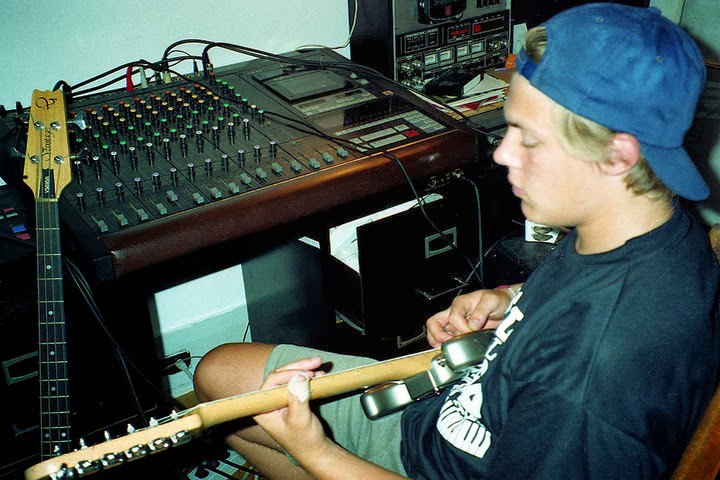
While all of this was transpiring young Jesse was getting his recording chops together in the family basement. He built his own studio using sound baffling meant for a dumpster when CHUM-FM studios were undergoing renovations. He also had access to a prototype AKAI 1212 recording console which used Beta –style recording tapes. The next few years were spent experimenting and learning the technical workings of the console and learning to play four instruments.

Jesse was taken with a sweet “radio friendly” song called “Pass the Dutchie,” by Musical Youth. This was the early days of MTV and videos. Jesse caught the bug. Then it was the Clash and Marley that sustained his attention.
When he turned seventeen he joined the Canadian pop/ska unit One, playing drums. After a short stay he moved on to Bernie J & the Galaxie Band, playing bass and mastering the Marley songbook. From eighteen to twenty-four on to a band called Revalation/Family Man.

With Pablo now focused on his renovation business he passed on his prized set of Ludwig drums to Jesse.
Through the next decade Jesse played drums on flatbed trucks; soca, ska and reggae at Caribana, and immersed himself in Jamaican music and culture. Pablo gave Jess a copy of King Tubby Meets the Uptown Rockers and that clarified the direction and sound he would pursue.

By early 2004 all the years formulating a sound and experimenting Jesse debuted his independent recording Campion Sound Clash and a rebranding; Jesse ”Dubmatix” King. That would be followed by Atomic Subsonic in 2006, Renegade Rocker 2008, Juno award winning System Shakedown 2010, a fifth Juno nomination for Rebel Massive 2013. All of the music remained rooted in the historic tradition, Trenchtown rawness and vibrant cultural landscape of Jamaica. The albums include such eminent artists and practitioners as the late Alton Ellis, Michael Rose of Black Uhuru, The Mighty Diamonds, Horace Andy,  Eek-A-Mouse, Linval Thompson, Sugar Minott, Ranking Joe, the late Wayne Smith and others.
 Dubmatix - Pull Up Selector   
http://www.youtube.com/watch?v=noEeUEBquDw

There were two films; the documentary RasTa: A Soul’s Journey produced by Marley’s granddaughter Donisha Prendergast and full length feature Home Again, detailing the abuse and sordid treatment of Jamaicans deported back to their homeland. Jesse provided and wrote several tracks for the films.

Our big reggae family came together in 2013 with the formation of the Rhythm Express. Both Jesse and I formed a collective focused on classic ska and reggae. A band with big voices; Selena Evangeline, Gavin Hope and Stacey Kay; bold horns; Chris Butcher trombone and Bobby Hsu alto saxophone. Everton ‘Pablo’ Paul- drums, Dubmatix, bass, Jorge ‘Luis’ Papiosco, percussion and pops King on keyboards. Two singles have made their way into the mainstream of alternative radio; “Black Woman” written by the I-Threes Judy Mowatt and “Hold Fast,” scripted by Gizelle Smith.
That set of drums that put all of us in motion in 1974 and loaned to Jesse by Pablo, stayed in the family sixteen years until Pablo formed the band Jamaica to Toronto and returned to playing publicly. Jesse had the set overhauled and restored to prime shape. To this day, it’s the sound of roots reggae on many a family recorded side. Much like the drum set that familiarized the planet to that Stax Record Memphis soul sound, Pablo’s kit still packs plenty history.

Marley left a profound mark not only on the commercial entities that use his music to lure sunbathers; the street-hawkers and merchants who capitalize on his legacy; but also, on those who seriously took his music and message to heart and share a reverence for the innovative rhythms and words that still resonate with the masses . We, as an extended musical family, celebrate 40 years of organ riffs, bass patterns, beats that sustain, and plenty of easy-skanking. We all still live on the Isle of Marley.


Friday, February 14, 2014

Marvin Gaye Stubborn Kind of Fellow


We were returning to the city and driving bumper to bumper on Manhattan’s East River Drive late summer of 1968. There was a chill in the air, yet enough heat inside to comfortably roll windows down and invite the urban rant of car-horns and shouting taxi drivers circulate. 

Bassist Stu Wasserman and I backtracked from one of those weeklong gigs playing mostly Sam & Dave, Wilson Pickett and Eddie Floyd upstate New York and were spinning the radio dial for something to arouse the right side of the brain when we come across the sound of tribal tom toms beating a war like pattern. Then a sweet gritty tenor pierces the landscape singing, “Ooh, I bet you're wondering how I knew 'bout you're plans to make me blue with some other guy that you knew before. Between the two of us guys you know I love you more. It took me by surprise I must say, when I found out yesterday. Don't you know that? I Heard it Through the Grapevine!” 

That was it! The two of us were gone. I’m beating the dashboard while driving my right foot through the floorboard of the car as if pounding a bass drum as Stu slaps the steering wheel like a high-pitch snare drum. It was one of the most blissful drives of my life and then it was over.

Damn!

We just happened across a station that had the audacity to play album cuts then fade into the next song without a back sell. That didn’t dissuade us. We did a cross-dial crusade in search of a second miracle. A few minutes pass and there it is again but this time it’s a different cast with a female voice (Gladys Knight). Killing good!

I hadn’t been listening to radio. I was constantly on the move. Greenwich Village was all about the moment, the time of day, not hanging near a radio unless you ran down the usual ten flights of stairs in your tenement building for provisions at a local bodega. The music was Latin based – Willie Colon, Fania All-Stars – sometimes the Vanilla Fudge. It was the road gigs I’d do my catching up.
Stu and I hung in, but since the first cut is usually the deepest, we were dead set on hearing that amiable tenor reprise our first encounter. Then it happened – “I’m listening to you folks – you asked for it. I don’t usually play the same track so soon, but the verdict is in – today’s Marvin’s call. Here it is again, Marvin Gaye and, “I Heard it Through the Grapevine.” 

Who didn’t love Marvin Gaye? Women especially did! Marvin was a second husband to many a house wife. While the man was at work Marvin was at the home site; in the bed room, the kitchen – even the front yard, depending on the receptive strength of the transistor radio. 

Women would say, “I like the Beatles OK – but they are boys. Sammy Davis – to old. Sinatra – is like being around a bossy father.” Marvin was the one who had an open invite into the bedroom.
Marvin didn’t just sing – he seduced. 

Marvin was born into an Old Testament house, strict Pentecostal; the son of a preacher man and a domestic. There were no gray areas only right and wrong or as Marvin would reveal; “It was like living with a king, a very peculiar, changeable, all powerful king, who would administer brutal beatings.” The relationship never improved over a lifetime of father and son battles. To be seen with an approving eye, treated to a kind word of respect or even fatherly affection was something never offered. It would be the fight of Marvin’s life.

Gaye started singing at age three. The church was the central family hub. That’s where the church organ was and those big spiritual voices. Gaye soaked it all in, learning to sing and play the keys.
After time served in the Air Force, Gaye began singing do-wop on street corners with neighborhood groups. This is where he learned to move the vocal parts around and re-harmonize. 

Gaye began touring and playing with various road shows when Motown record’s Berry Gordy heard him with the Moonglows and quickly signed him to the label. Gaye soon married Gordy’s sister Anna who died recently at the age 92. Anna was a big part of the family record business.

Gaye first worked as a session drummer for the label playing on Smokey Robinson’s early hits with the Miracles. He struck gold himself with his fourth release for Motown, “Stubborn Kind of Fellow.” That set him on a magnificent pace – 20 major hits over the next ten years with a variety of producers.

When Gaye rendered a performance it was divine. The voice was a fusion of the romantic and sensual. The phrases were delicate, touching and always had the feeling of a light jazz solo.
Gaye devised a rhythm base to every song that gave it a unique foundation. The drums were up front in the mix; always pushing the sidemen along and in tune with the dance movements of the day.
It was the duets with Tammi Terrell that stuck with me; “Aint No Mountain High Enough, Your Precious Love, Ain’t Nothing Like the Real Thing” and “You’re All I Need to Get By,” written by Nicholas Ashford and Valerie Simpson.

These were the kind of songs that seemed to come from a place never visited. The melodies soar and build to an erotic climax. Each play brought the same results; complete aural satisfaction.
I got a good feel for the full potential and depth of these songs while backing the Ray Charle’s Raelets in 1968 at the California Club on Santa Monica Boulevard. The group at that time included Merry Clayton, Clydie King, Gewn Berry and Alex Brown. They were signed to Tangerine Records.
The week long engagement is one I’ll never forget.

I was in the band – Kent & the Kandidates and it was day one; full rehearsal. First up, “Ain’t No Mountain High Enough.” I had heard on radio and remember Marvin Gaye and Tammi Terrell’s searing version but this was about to be something quite different. Four-part harmonies; glorious interplay.

Each pass of the song would bring me chills as the four women invested more trust in us. Then on to, “You’re All I Need to Get By.” The same sensation forced its way up my spine. These were moments all musicians wished were engraved for an eternity. 

I left the first rehearsal and quickly purchased Gaye’s version. I needed to brush up on the songs and find the appropriate keyboard voicings. After spending several solitary hours transcribing,  I hit Wallach’s Music City and began purchasing all things Marvin Gaye. Wallach’s had listening stations where you could peel the shrink-rap and lose yourself in a long playing disc.

The gig with the Raelets was sensational. Every night a cast of Hollywood luminaries would take up residence. Every night comedian Red Foxx would take his usual position right side of band along the cushioned wall.

Gaye’s music also had an impact on marriages. Most newlyweds come with differing tastes in music. I was wound up in Miles Davis, Otis and Procul Harum; wife Kristine, Marvin Gaye and more Marvin Gaye. Our home was an aural temple for Marvin. Both night and day, Gaye charmed his way into our lives. 

Gaye gained complete control of his music in 1971 with a concept recording What’s Going On; which to this day is recognized as one of the grand milestones in contemporary music.

Gaye self-produced and co-wrote. Motown head Berry Gordy wasn’t buying. Gordy knew hits – those 2:30 minute short plays that get straight to the hook, but nothing as elaborate and uncompromising as this ode to a Vietnam War veteran and told from his point of view. The album touched on relevant themes of the day; hatred, injustice, suffering; things that were eating not only at the heart of the black community but young whites. The long marches in Selma and fight for civil rights may have witnessed a fair amount of attention and action, but the war was grading on the public conscience and demoralizing. Gaye caught the rhythm of the times and need to capture the heartache and dissatisfaction with the war mongers. The song itself was written by Renaldo ‘Obie’ Benson, Al Cleveland and Gaye and influenced by an incident of police brutality witnessed by Benson.

I’ve played What’s Going On in so many formats; jazz trio, passable singers, big band and pop units. Few understand the essence and brilliance of the song. Forty years later the dark textures and ‘70s haze has lifted and the song sails along on its own major to minor momentum.

Gordy resisted releasing. Gaye sidestepped and even got the six minute single version of What’s Going On to radio. It would sell over two million copies.

Gaye’s marriage to Anna Gordy was turbulent and very public; their separation a messy affair. The settlement awarded her a portion of royalties from his future recordings. Marvin countered with a tell all; “Here, My Dear.”

Gaye would eventually file for bankruptcy when a judge ordered him pay his first wife $600,000 in royalty payments as part of a divorce settlement. He then moved to Europe to escape the Internal Revenue Service. Gayle began ingesting greater amounts of cocaine and exhibiting bizarre behaviour during his “Sexual Healing” tour, dressed in bikini underwear and silk robe.

The living days were getting shorter and showdown with his combative father, on the horizon. Gaye had one last commanding performance - an a cappella version of “The Star Spangled Banner” before the 1983 NBA All-Star game, shocked the stadium. To this day it is considered a classic.

Gaye’s life was played out as a battle between right and wrong and his father judge and jury. Gaye was fatally shot twice by Marvin Gaye Sr. April 1, 1984. Evidently, Gaye intervened during an argument between his parents and Gaye Sr. pulled the trigger. Ironically, it was a .38 Smith & Wesson caliber pistol Marvin  Jr. bought his father Christmas Day 1983 to protect the family from intruders that was used.

Gaye was suicidal, depressed and struggled with a host of personal demons. These are the things many a great artist has fought losing battles – the most recent, the extremely gifted actor Phillip Seymour Hoffman. 

With Gaye’s departure nearly thirty years ago, his personal demons have been forever vanquished. For us, the music says something completely different. The message of peace, understanding and life between the sheets is reassuring and comforting. Those melodies, dance rhythms, and sweet voice will be heard long after we all exit.


Friday, February 7, 2014

The Beatles A Hard's Day Night


In the early sixties most Americans viewed England as Winston Churchill’s private estate; through the changing of the guard at Buckingham Palace and civil disobedience of Robin Hood and his merry band of scavengers. We never knew the location of Sherwood Forest - yet it seemed overly-crowded and in perpetual conflict with malicious horsemen compared to the untapped Smokey Mountains of Tennessee and occasional hillbilly bad boy.

Hair styles for men ranged the gamut between military and cartoonish. Either you adopted a flat-top; that being both sides head skinned and seared like a lamb chop courtesy a poorly conceived electric razor, then leveled on top; or a 180 degree head skinning leaving a patch of greased tumbleweeds sprouting above. I never gave it much thought until the day of the last great invasion.
Our nation was still mourning the death of John F. Kennedy, awaiting the verdict from the Warren Commission. Kennedy’s assassination stirred vigorous debate due largely to the Abraham Zapruder silent home movie of the assassination. Some clung to the lone gunman theory; others claim the Zapruder film shows a projectile coming from a grassy knoll within range of Kennedy motorcade.

America was in a foul mood; then something unexpected happened – the British Invasion; the Beatles arrive. John, George, Paul and Ringo. Even more so; an optimistic, jubilant single called, “I Want to Hold Your Hand,” finds its way into the pulsating hearts of America’s pre-teens. 
In all honesty I was a Rolling Stones fan. I penciled their name all over my school notebooks. To me, the Beatles where mildly entertaining compared to the roadhouse blues and coarse guitar work of Keith Richards and Brian Jones. Besides, how could you get past a band who named themselves after a Muddy Waters song? What the hell was a Beatle?

We were still under the influence of Memphis soul and firmly in the grip of rock & roll. Elvis reigned supreme while Jerry Lee Lewis raised hell around the perimeter. Chuck Berry still had a hold on the naughty girls but that was about to break after a fling with an underage child.
Suddenly, one small 6’’ 45 RPM recorded single, was about to transform AM radio.

Few recognized the coming upheaval. At first it seemed almost comical – four young men from Liverpool, England – a place, so not on the world map – sporting longish hair and bangs and wearing custom made suits with pointed boots, could throw a wrench in the depressed world clock and jar us out of a spiritually imposed coma seemed improbable. 
On December 10, 1963 - CBC Evening News ran a five minute special on the Beatles. Within moments request lines lit up all across America. In less than three weeks, “I Want to Hold Your Hand,” sold nearly a million and a half copies. America was blitzed with a Beatles papering – five million posters of the supposed young lads who spoke with funny, endearing accents, covered the landscape. Most didn’t realize there was nearly a decade in age separating the Liverpool quartet and their young admirers. Then the screaming began – Oh, those shrieks and rapturous tears!

It was a challenge being around a group of teenage girls. Something peculiar was taking hold of them – much like attending an old fashioned revival as the holy-spirit grabs believers around the ankles tossing them about like a stuffed doll. They were possessed. Boys? Suspicious!
To that point, Elvis owned most female affection and was holding the passion right into their early twenties, but even he was losing his supremacy. It was as if someone dropped a curtain on the past, cleared the stage and opened with a new show. Lights out Elvis!

Miles across the Atlantic Ocean an ambitious merchant had an original thought and put it in action – that person would soon be the Beatles first manager, Brian Epstein.
"I was immediately struck by their music, their beat, and their sense of humour on stage – and, even afterwards, when I met them, I was struck again by their personal charm. And it was there that, really, it all started," says Epstein after catching the band at the Cavern Club on Mathew Street in Liverpool.

Epstein worked in the family department store, in the record department. He absorbed not only the music but sales techniques of his peers. Although he understood marketing he had little understanding of contracts and the music business. That would cost songwriters Lennon and McCartney dearly through rights giveaways of original material by way of publishing house Northern Songs; that still haunts today.
From a teenage boy’s perspective change came too fast and with consequence. Like so many young men of my time keeping pace with the Beatles meant growing hair below the ears and dressing apart from the crowd. Our house was a battlefield. Pops took offense with our non- conformity. He saw it as a threat to his position in the community and at times embarrassing.

A good part of America was not accepting. By this I mean, the Beatles seemed a harmless diversion, but any influence on people’s set ways, would be met with conflict – which played out home to home depending on family values. Sports and war personalities were the measure of a man – musicians – way too radical and unemployable to be considered members of a stable family.
I remember meeting my mother at a Kroger’s supermarket downtown Jeffersonville, Indiana and having a woman walk up to her and ask, “How can you live in the same house with a Beatle?” We are talking about me having hair no more than an inch or two in length. Another incident solidified the necessity to one day move. I was waiting for a bus on my street corner when a woman walks up and spits on me. She then castigates me for looking like a Beatle. As I’m getting on bus – she spits again. This is when the bus driver injects – “You can’t be spitting on girls mama.”

That first wave of Beatlemania sweeping America was refreshing. The rest of the world viewed the Beatles with great curiosity and embraced without reservation. They were eloquent, stylish and confident trendsetters; above all – big fun!
They were made for television. Ed Sullivan took a fancy to the group. They came absent the kind of criticism Sullivan endured for showing a sexually charged Elvis doing the infamous leg-tremble.

Colonel Tom Parker managed and mismanaged Presley’s choices of film projects. The singer’s potential was wasted after his debut in ‘Love Me Tender’ on Hollywood schlock. Busty bikini clad playmates, dumb scenarios; fast cars, contrived storylines, lured young women into theatres and filled the Colonels bank account but did nothing to secure Elvis a life immortalized on film.
The Beatles on the other hand stood with an art-film maker – Richard Lester. He chose to craft a comedy integrating their personalities - Hard Day’s Night, starring John Lennon, Paul McCartney, Ringo Star and George Harrison; splendidly shot in black and white and loaded with great songs. Plenty of singles recordings ripe for top-forty airplay.

Lester and writer Alun Owen tapped into an evolving film genre by following the rhythm of the new wave of British film making and allowing the individualities of the Beatles dominates. The film follows two days in the life of the band- and yes, plenty of screaming.
I caught the film with my brother Wayne at the Rialto, 4th Street just south of Chestnut in Louisville, Kentucky. Elvis even played there in 1955. I figured nothing this carefree and blissful existed in our home sphere but was willing to believe otherwise. We returned a couple years later multiple times for the Beatles follow-up film, ‘Help.” The Beatles were a welcomed fantasy in our world, far removed from the claustrophobic melodramas playing out at home and in high school.

Where Elvis came across as slow and coy, the Beatles fired on all cylinders – much like the Marks Brothers in Night at the Opera.
“And I Love Her, I Should Have Known Better, Tell Me Why, I’ll Cry Instead along with Hard Day’s Night,” played endlessly on radio.

Early on, Lennon and McCartney established themselves as songwriters seeking out covers of their songs amongst the many middle-of-the road singers who inhabited BBC radio. In many ways, that’s where your credentials as inspired song writers were validated.
It was the willingness and compromise between the two that brought the collaborations into the realm of superior works of music.

Lennon and McCartney admired the partnership and completeness of hit songs scripted by the duo Carol King and Gerry Goffin who wrote such hits as; “Will You Love Me Tomorrow, One Fine Day, (You Make Me Fell Like A ) Natural Woman, Some Kind of Wonderful.”
The process was based on listening and setting all egos aside.
Lennon and McCartney had a style and tone to their approach. Lennon had an edge and creative fiction writer’s way of telling a story, detached from any instrument. McCartney, the more proficient musically, could pick up a guitar, hammer away at the piano or build from an exquisite bass line, a song in a more traditional manner. There was a bond of trust between the two allowing each to ask for help when a song was near completion and hopefully find a solution for a challenging bridge or verse. It was about having another point of view. They thought nearly alike but different.

John’s originals came from a place a great distance from McCartney’s. Titles like; “I Am a Walrus, Come Together, Lucy in the Sky With Diamonds, Strawberry Fields Forever,” all required complex, innovative arrangements and instrumentation.
McCartney’s; “ Hey Jude, Yesterday, Fool on the Hill, Blackbird, Here, There and Everywhere seemed as if they could have been conceived in the Mecca for songwriters – Manhattan’s Brill Building.

Together – they were able to bring the colors, shapes and universality of the moment into such hits as; “A Day in the Life, Day Tripper, A Hard Day’s Night, She Loves You, and the hit that started it all, “I Want to Hold Your Hand.’
They never resented others for the remakes of their songs. Paul admitted he liked some of them more than their own versions. There are thousands; from jazz, to folk to pop to rhythm & blues covers. It was the melodies and harmonic possibilities that attracted other artists.

I for one was drawn to the sound of the band. Each recording came fully arranged and with specific parts for each player.
I used to test my parents over dinner with everything from Stravinsky’s “Firebird Suite” to John Coltrane’s long playing “India.” Both would surpass the duration of sit down dining and linger into study time. Pops patience was tested with Coltrane’s bag-of-snakes-dance and ferocious energy emanating from his soprano saxophone on a song called “India” causing him to shut it down during dinner. It was all burning - churning barks and squeals for fourteen heroic minutes. Then one evening I serve up the Beatles “I Feel Fine.” At two minutes and ten seconds it took multiple plays to complete first course. I was enamoured with Ringo Star’s drumming. He had adopted a jazz rumba beat I was familiar with and played it with great authority throughout. Towards the end the band does this breakdown section leaving Ringo to fill in with a couple syncopated strokes of the toms and snare drum. I found myself spinning the single over and over just to hear that fill. Needless to say, it was received with the same enthusiastic welcome as Coltrane.

One of the major casualties of Beatlemania was local disc jockeys. The old guys who spoke with a sweet Southern drawl or brain popping teenybopper cadence were tossed aside in favour of younger men with a fake British accent. Not only was tone a requirement but DJs were now expected to meet the public in a manner unheard of before. There would be all sorts of gimmicky promotions. The new guy would ride around the city in horse and buggy mimicking what Americans perceived British lifestyle. The fellow would be draped in London’s chic Carnaby Street tailored garments. The sock hops that usually featured ten-piece cover bands playing the latest top-forty hits were now morphing into four piece units familiar with the recent Beatles catalog. This was a game changer.
Foremost, the Beatles were a band that played their instruments well and were exceptional writers and singers. Most pop concerts to that point featured a single artist who coasted on the success of a solitary recording backed by a competent local band.

As the years gather the Beatles become the world’s finest studio recording band owing much to producer George Martin. Martin’s long service and aptitude within the walls of London’s top recording studios served the Beatles well. They were innovators; curious and demanding of themselves and the limited technology afforded them. The spent long hours finding the right groove, a sound for each song that gave it an identity. A drum fill, guitar riff, bass line – a vocal harmony that would set them apart from anything that had come before. Most hit records before were accomplished by employing the same collection of studio veterans then let producer fill in the holes. Standing on the sideline awaiting their turn; the artist.
On a social level – the Beatles transformed the world. They spoke out much the same as the left-leaning union activists and songwriters of the times – the Weavers, Pete Seeger, Woody Guthries; many who were labeled communists. The Beatles got a pass. They were far more cheerful and easy to read. They were by now safe. The message was the same but the delivery was cloaked in sweet harmony, gentle verse, accessible humour and often complex experimental sound-scapes.

The hard hats demanded their heads but few actually took their demands seriously. By the early eighties those Southern men whose heads had been flattened and stripped of hair were now looking like Taliban tribesmen from the distant future.
The Beatles also changed with the times. As the war in Vietnam escalated and the youth movement became more politicized the Beatles began acting their age and committed themselves to numerous causes. They experimented with mind-altering drugs and flirted with mystical shamans. They were in step with the times.

The vast catalog of songs and recordings captures the evolution and growth – from delicate tunes about catching a first kiss or a girl’s attention to putting the brakes on genocide.
It’s never easy being all things to all people yet the Beatles covered a lot of ground in one decade leaving the planet humming unforgettable melodies that to this day, still impact our lives. I learned to appreciate them long after they packed it in April, 1970.

The world cried, begged and telephoned but no amount of coaxing could bring them back together. 44 years later, and considering their lives in between, perhaps it was the best decision.
Rubber Soul, Revolver, Sergeant Pepper’s Lonely Hearts Club Band, Abbey Road, the Beatles, reigned supreme on my various turntables for years to pass. It’s been a Hard Day’s Night!


Otis Redding These Arms of Mine


The long drive from Atlanta past fields of sprawling kudzu and fog-shrouded back-ways was the perfect way to decompress after a long night playing on the funk side of town. Radio was the best company a carload of musicians could ask for too free the mind of set lists and missed opportunities with local groupies. No time for a sleep-over or three dollar T- bone steak.

“These arms of mine, they are lonely, lonely and feeling blue. These arms of mine, they are yearning, yearning from wanting you - and if you would let them hold you, oh, how grateful I will be.” The radio spoke.
The crippled station wagon took on road dust and patches of red clay packed beneath a decaying chasse -the windshield; a graveyard for suicidal beetles, palmetto bugs, wasp and grasshoppers.  Sleeping branches of tall Georgia pines hovered above as mockingbirds eye-balled and serenade all night-runners. The next town only 225 miles away would arrive just past noon. The day ahead was scheduled to accommodate a stopover at one of those WLAC kinds of stations – you never remembered the exact call letters. You just knew it was the only one clear signal enough to hear the kind of music you were playing and a DJ would be yelping like he was riding a amphetamine high - the other alternative; a tiresome basement minister with a transmitter and bad case of insomnia preaching to the open spaces and passing cars Jesus’ sacred rules; how to ward off imagined demons.

“Don’t forget tonight at Round Hall – The Mob – big funky rhythm machine from Chicago - $5 off if you bring a date, says the veteran. “Satan will boil you in blood water and dump you in a purgatory cell if you don’t repent and come to the Lord now,” says the lesser known.
"These arms of mine, they are burning, burning from wanting you. These arms of mine, they are wanting, wanting to hold you.” Back with more Otis Redding in a moment, says the DJ – the lone voice in the dark, humid landscape – now a band member.
As the band travels on - there’s no place to relieve oneself other than a roadside pullover and step into bush. Nothing rural sleeps at night except adults and small children – the rest of the landscape is busy hunting down a meal.

It’s now three in the morning and Otis Redding is in repeat cycle. The DJ’s words linger on and on.
“A son of a preacher man born of hard Georgia soil, did you know young Otis ran his bare feet through these woodlands surrounded by copperheads, diamondbacks and coral snakes- spiders the size of small animals. There you have it one solid hour of Dawson, Georgia’s own – Otis Redding, born 1941 right down here where the smokehouse hams it up and bird hounds chase peasant for sport. This is Captain Ray Williams WXBX signing off. We’ll be back on the air in three hours with the farm report.”

How many miles did the sax player riding shotgun watch the white dividing line lead to the last exit? How many miles did the sleep deprived players soak up every busted vowel and mournful plea from Otis Redding? Those lovesick phrases and bent notes stretch as far as the distant horizon.
Otis sang mostly to women and didn’t beg for love; he demanded it. Not that wimpy falsetto stuff bad singers employ today – all girly tones - but in a big bold macho style. “You are now mine, let me take you home, hold you, protect you and make eternal love.” Few knew he was a young father and a serious businessman in transition.

While onstage; women screamed, waved for his attention. Otis would take a bold defensive football stance as if he was about to block the opposition; hold steady, then sing from the bottoms of his feet. The voice was virile, masculine, demanding and magnificent – all Baptist and Pentecostal.
Otis’s dad was a minister – in fact the Redding family were many things.

Otis left home at 15 to support his family working with Little Richard. Richard’s own road show was more holy-roller than mainstream rock and roll. Otis absorbed Richard’s forceful singing. Hard on the top beat and minister to the message.   He knew his style cut through all the soft white boy radio tunes and aroused the bones of those who wanted to lose themselves in dance.
Young Redding worked as a well digger, gas station attendant, played a bit of piano and guitar – whatever it took to take care of the family. Otis’s dad suffered from tuberculosis. In 1958, he ran a string of 15 victorious weeks in a singing contest at the Roxy and Douglas Theaters collecting $5 a clip. He knew then he had star power. He toured the Southern United States playing the Chitlin’ circuit – the only venues a person of color could freely exercise their craft.

There were many bands, sojourns and even a marriage at age 19, to 15 year old Zelma Atwood at “The Teenage Party.” Redding would eventually meet producer Phil Walden and Bobby Smith who would sign him to Confederate Records - the other notable on the label Florida; white soul singer Wayne Cochran. Walden signed on in 1959 to manage Redding’s affairs; later guide the careers of soul singers Al Green and Sam and Dave, and launch the Southern blues/rock unit the Allman Brothers.
In 1962 Atlantic Records Joe Galkin through his connection to Walden sent Redding to a Stax studio in Memphis. Booker T. & the MGs performed on the session that produced two songs – the long forgotten ‘Hey, Hey, Baby,’ which studio chief Jimmy Stewart said sounded too much like Little Richard and “These Arms of Mine,” that would eventually chart and sell over 800,000 copies – Otis first hit recording. Otis and ballads were on the move.

Redding would compress an astonishing career into the next five years before dying in a plane crash. December 10, 1967 in the afternoon, the plane carrying Otis Redding, his valet, and a number of his backing band - the Bar-Kays crashed into the frigid waters of the Squaw Bay area of Lake Monona, just outside of Madison, Wisconsin. Word of his sudden death at 27 came as a severe blow to the music world and his millions of followers.
“Pain in My Heart, Tramp, Sitting on the Dock of the Bay, I Can’t Turn You Loose, Satisfaction, Try A Little Tenderness, I’ve Been Loving You Too Long , Respect, Mr. Pitiful, Fa-Fa-Fa-Fa-Fa (Sad Song), Shake”; all played like an endless loop on prime time radio. Redding’s ‘Dock of the Bay’ record became the first posthumous number one hit on both the Billboard Top 100 and R&B charts.

That road band eventually pulled into the next town, set up and played four sets of Otis, Wilson Pickett, Willie Mitchell, Ike and Tina, some Little Richard, Bobby ‘Blue’ Bland, Lowell Fulsom and the rest – after the gig - most sleeping in the same seats they traveled in. That’s how it was following the hit makers and playing the hits of the makers. If you didn’t write them – you played them six nights a week – twelve months a year. Then it was over.
With trailer packed and all accounted for and another a hundred and eleven miles before Tallahassee, the players fall back into a radio trance; only the drummer mumbling nonsense about some honey left behind he’d marry if time permitted.

The deafening sound of courting cicadas’ causes’ front and back windows roll up tight – speed limit 60 mph.
“Tramp!
What you call me?
Tramp.
You didn't!
You don't wear continental clothes, or Stetson hats.
Well I tell you one dog-gone thing. It makes me feel good to know one thing. I know I'm a lover.
Matter of opinion.
That's all right, Mama was. Papa too. And I'm the only child. Lovin' is all I know to do.
You know what, Otis?
What?
You're country.
That's all right.
You straight from the Georgia woods.”


Can I get a witness?


Elvis Presley Love Me Tender!

You had to be around to witness the insanity. Television was relative new to most households with NBCs Dave Garroway (1952-1961) holding court mornings on the Today Show and Ed Sullivan Sunday nights. There was something simple about life in the ‘50s, although if you step away a lot more complex than remembered.

 Spencer Tracy and Katherine Hepburn were the dream parents and often assumed the perfect marriage. A drive to a greasy burger stand would find you waving at the occasional passing vehicle. Everyone went to church – some devout, others on business. School was in walking distance and summers long and hot - time enough to grow an inch or two.

 Elvis Presley began his career in 1954 under the guidance of famed Memphis record mogul Sam Phillips. Presley had the sweet-sounding church tenor you’d hear above all the heavy baritones that would rumble-turn like dying steam locomotives. You couldn’t make out the Christian words because men just didn’t know them – they stood and honked along as women clarified.

 Elvis was a singing angel.

 Black and white news was polar opposites. Hard news carried the daily sit-ins, civil rights marches, the murders, intruders –drowning; local news – knitting circles and farm reports – the occasional obituary.

 Patti Page, Perry Como played endlessly. The Yankees ran a string of World Series triumphs – Mickey Mantle was God number two.

 Most mornings, a few blocks from my bedroom window, you could smell sun-baked roughage flowing down the Ohio – the stench of cooking Jack Daniels, the odor of baking Wonder Bread, and witness piles of tortured driftwood catch shoreline near the falls across the river from Louisville, Kentucky.

 Then one day life-monotony was interrupted – “Heartbreak Hotel,” by this young singing sensation far-south pushed Nat Cole, Patti Page and Perry Como to the sidelines and everyone was talking. Who is this guy Elvis? What kind of name is that? Men laughed, women gossiped and teenagers rage-worshiped. Everyone had an opinion and everyone watched.

 Good church folks are always the first to condemn. It seems whenever there’s change, those in the “Jesus know” have to operate fast; judge and condemn. Oh my, those fire breathing evangelists were everywhere.”Take those Elvis records to the dump and burn – or we should do it in the church parking lot and make an offering to our Lord, Jesus Christ.” Most men just scratched their skulls, talked and laughed – to them this was just a silly boy whose popularity would soon pass like that silly Davy Crockett ‘Alamo’ record.

 Girls fainted, boys greased up.

 That sound – that mix of country blues, gospel, and rhythm & blues hit white folks in a different way. They never bought into the rough-edged street blues of black folks with those suggestive lyrics. This new take was easy to absorb. There was a fat-back beat which rocked and swung at the same time. There were new ways to dance around that beat – you just had to invent or wait to see what Philly was doing on the dance floor and adapt.

 Elvis was the chief salesman; sweet-faced, soft spoken, humble, and thoughtful – a boy every momma would love to nurture and marry off.

 Small town America loved his radical side but had to get past the sex part. You knew everyone was doing it because babies kept coming like they’d been assembly line produced direct to homes; yet talk of such things attracted morbid guilt. I mean Playboy Magazine was around but mostly read in the fields back of barnyards, men’s washrooms or frat parties. There were a few liberal leaning families in a community where the man of the house proudly displayed in his private man cave.

 Elvis was big talk in our house. Pops called him a three-chord wonder.

 Dad owned a guitar but could never wrap his head around a seventh-chord besides he knew jazz great Jimmy Raney and there was no way this new music would rival his sacred jazz God.

 I had no opinion – just too young and mostly trapped by spirituals. Grandma looked after us during daytime and mostly played upright piano and sang about Jesus. I’d occasionally slip my hands under her fingers and weasel a few bars of ‘Chopsticks.’

 One day the big announcement arrived – Love Me Tender Elvis’s film debut was coming to The Grand in New Albany, Indiana. For the life of me, I would never expect my stern dismissive parents would choose to go. That we did!

 As the curtain opened, dad mostly talked. He sounded off through the movie and glanced around at other men looking for affirmation; a laugh and a nod. Mom stayed fixated on dad. She never really watched anything but him most days. If he said – ‘that was awful – she’d respond – “that was awful.” That was what life was for women in the ‘50s.

 Love Me Tender caught fire. People went repeatedly to catch the young man seen sawed in half on Ed Sullivan Show– guitar bouncing – legs screen-amputated.

 Black and white makes every aspiring actor look credible –Elvis pulled it off. The song was so rich and gorgeous to hear in the movie theatre, young and old talked about for weeks. The local record store couldn’t keep his music in stock. Every young girl papered her bedroom with that beautiful face – boys imitated. Elvis not only conquered vinyl, he was now on a mission to claim a major roll in the celluloid world of music history.

 Love Me Tender was far different from cameo appearances of the great bands of the day – this was the beginning of mysterious brooding young lead man, who lived in the edgy world of rock & roll. Marlon Brando gave us a sample of how magnetic a young man of the time could hold our attention in The Wild One. He oozed sexuality, burned with deep passion and rebelled against the previous decades of social confinement. All Elvis had to do was find a zone between Brando and himself and James Dean and look the part on screen. James Dean struck after Brando in Rebel Without A Cause, then six years later Warren Beatty in Splendor in the Grass; all young attractive men who could sell a young audience on radical change and the discomfort of growing up in the suffocating ‘50s – and a alternative lifestyle.

 Rock n’ Roll was here to stay! The soggy sounds of yesterday seem to disappear over-night; boys toughened up, girls got all mouthy. Kids began to punk out in school. James Dean, Brando, rebellion, retaliation, uprising was playing to the same beat. Meanwhile, the young man who started it all was just a plain-old country boy who loved his mama and a good song.